

Several verses in the Revelation addressed to the Muhammadian consciousness repeat the expression Aqāma al-ṣalāt, aqīmū al-ṣalāt, iqām al-ṣalāt…
In classical exegesis, as well as in nearly all available translations, unless there is one I am unaware of, this expression is rendered almost exclusively in ritual terms: “establish the prayer,” “perform the prescribed prayers,” “observe the ritual prayer properly.”
That understanding may be correct at the juridical level. But it remains incomplete at the existential level. It is insufficient in light of the centrality of the expression within the revealed discourse.
Aqāma al-ṣalāt is not a marginal formula. It is repeated insistently. It appears approximately 67 times in the Qur’an in its direct forms (aqīmū al-ṣalāt, yuqīmūna al-ṣalāt, iqām al-ṣalāt, etc.), not counting related constructions where the root q-w-m is associated with ṣalāt. It is one of the most recurrent markers of the quality of the muʾminūn, those who establish īmān as a space of trust, stability, and inner alignment.
We encounter it, for example, in:
2:3 — alladhīna yuqīmūna al-ṣalāt
2:43 — aqīmū al-ṣalāt
2:110 ; 4:77 ; 6:72 ; 14:31 ; 17:78 ; 22:41 ; 24:56 ; 29:45 ; 31:17; 62:9
It is even attributed to figures who lived before the ritual form of prayer known in Islam today, such as Abraham (14:40) and Ishmael (19:55), as well as earlier communities. Its meaning therefore cannot be reduced to the historical ritual structure alone.
The verb aqāma means to erect, to establish, to cause something to stand upright. It does not merely mean to perform an act. It means to make something stand in its rectitude. One aqāma a structure. One aqāma an axis.
Thus, Aqāma al-ṣalāt may be understood as:
Establishing one’s verticality.
Standing upright within one’s axis.
In this perspective, ṣalāt is not first and foremost a ritual. It is connection. Connection to oneself. Connection to one’s inner truth. Connection to the Divine. It is the living bond that prevents the human being from scattering, fragmenting, dissolving into the conflicting currents of the world.
And precisely because it is connection, it necessarily produces a horizontal manifestation: the establishment of just and balanced relations with others.
There is no authentic verticality without relational consequence.
If I am connected to the Divine, I cannot transgress the human.
If I am inwardly aligned, I do not seek to exceed my proper measure.
If I stand within my axis, I do not expand my space at the expense of another.
The horizontal expression of verticality is respect for limits.
To stand upright is not to go beyond one’s right.
It is not to encroach upon the right of others.
It is not to extend oneself at the expense of another’s space.
Verticality regulates expansion.

⸻
After the Prophets: The Loss of the Axis
In Sūrat Maryam, after recalling the great prophetic figures, Zakariyya, Yaḥyā, Maryam, ʿĪsā, Ibrāhīm, Isḥāq, Yaʿqūb, Mūsā, Hārūn, Ismāʿīl, Idrīs, and beyond them, all the prophets since Noah, praised for their moral and human excellence, keeping their promises, truthfulness, solidarity with the Ḥaqq, alignment with what is Beautiful, True, and Great, the text describes a rupture:
“Then there came after them generations who lost the ṣalāt and followed the shahawāt.” (19:59)
These prophets embodied verticality. They offered humanity a model of axis. They demonstrated what it means to remain inwardly upright, a human being worthy of the Divine Breath infused into the erected Adamic form.
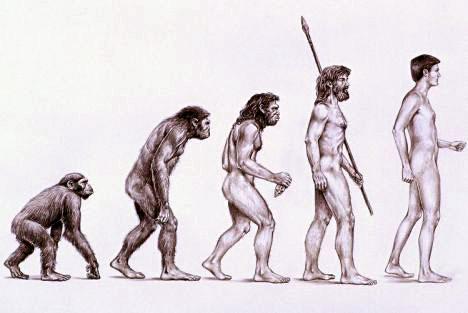
Then comes the loss.
The text does not say they fought against ṣalāt.
It does not say they formally abolished it.
It says: aḍāʿū al-ṣalāt, they allowed it to be lost.
The verb aḍāʿa means to let something dissipate, to let it decay through neglect, to allow it to gradually unravel.
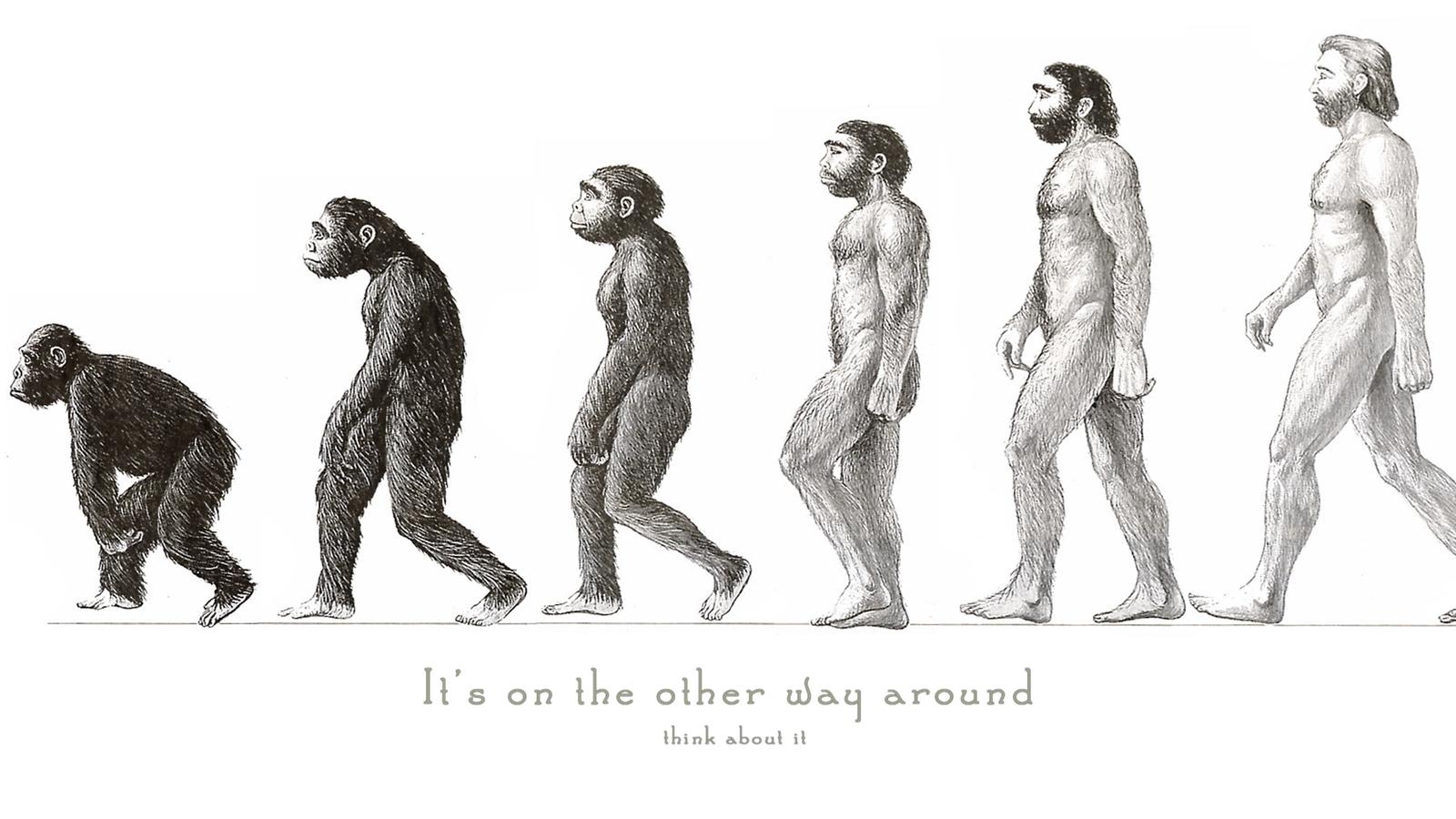
One does not destroy the axis in a single stroke.
One loses the posture.
The inner posture relaxes, collapses, becomes misaligned.
The axis cracks.
Verticality slowly dissolves into dispersion.
And when the axis disappears, the energy does not disappear. It redeploys itself differently. It does not vanish, it simply changes direction.
⸻
Wa-ttabaʿū al-shahawāt: Following Disaligned Expansion
The verse continues:
wa-ttabaʿū al-shahawāt.
They followed the shahawāt.
This term is often translated as desires, passions, pleasures. That is not false. But it is not sufficient. And such a translation can become dangerous if it is interpreted as contempt for pleasure or for the beauty of this world.
The problem is not pleasure.
The problem is the loss of measure.
Shahwa is not simply natural desire embedded in human vitality. It becomes problematic when it is expansion without axis.
It is the pursuit of the “beyond”, beyond rightful limit.
Going beyond one’s due measure.
Extending.
Overflowing.
Seeking to dominate others.
Seeking superiority in the eyes of people.
Seeking to become or act like a Shāh or ShāhanShāh, conquering, controlling, subjugating and enslaving, expanding one’s power and enlarging one’s kingdom at the expense of justice and against all rightness.
When verticality is lost, expansion becomes predatory.
⸻
A Note on the Letter Shīn
From the perspective of modern linguistics, Arabic letters do not carry independent meanings; meaning is conveyed through triliteral roots.
However, there exists another, older and more contemplative school in which letters possess energy, resonance, and orientation. Ibn ʿArabī, for instance, devoted extensive reflection to the symbolism and energetic quality of letters.
Before structured words, peoples had sounds. And these sounds already carried impressions, directions, intuitions.
In this perspective, the letter shīn, with its expanded breath and phonetic openness, carries a dynamic of radiance and outward diffusion.
It appears in:
• shams (sun)
• shuʿāʿ (radiance)
• shayṭān
• sharr
• sharīʿa
• shirāʿ
• sharā
• even in Yeshua
There is in the shīn a sonic opening, a spreading, a horizontal deployment.
This is not a strict scientific linguistic rule. It is a symbolic reading, coherent within a living tradition attentive to the primordial breath of language.
In shahā, there is that breath of expansion.
And when that expansion is no longer contained by verticality, it becomes avidity.
⸻
Aqāma versus Aḍāʿa
The opposition in the verse becomes clear:
Aqāma al-ṣalāt → establish the axis.
Aḍāʿa al-ṣalāt → lose the posture and allow the axis to dissolve.
Ittibāʿ al-shahawāt → follow disordered expansion.
This is not an opposition between prayer and pleasure.
It is an opposition between axis and dispersion.
Between verticality and predatory expansion.
When connection is alive, desire remains measured.
When connection is lost, desire becomes domination.
⸻
Existential Implication
This verse is not merely historical.
It describes a permanent inner dynamic.
Each time I lose my verticality,
I compensate through expansion.
Each time I leave the axis,
I seek to extend myself outward.
Ṣalāt is the inner gesture that maintains the axis.
It prevents vital energy from turning into predation.
To stand upright does not mean forbidding oneself to desire.
It means desiring without transgressing.
Living expansion without losing the axis.
